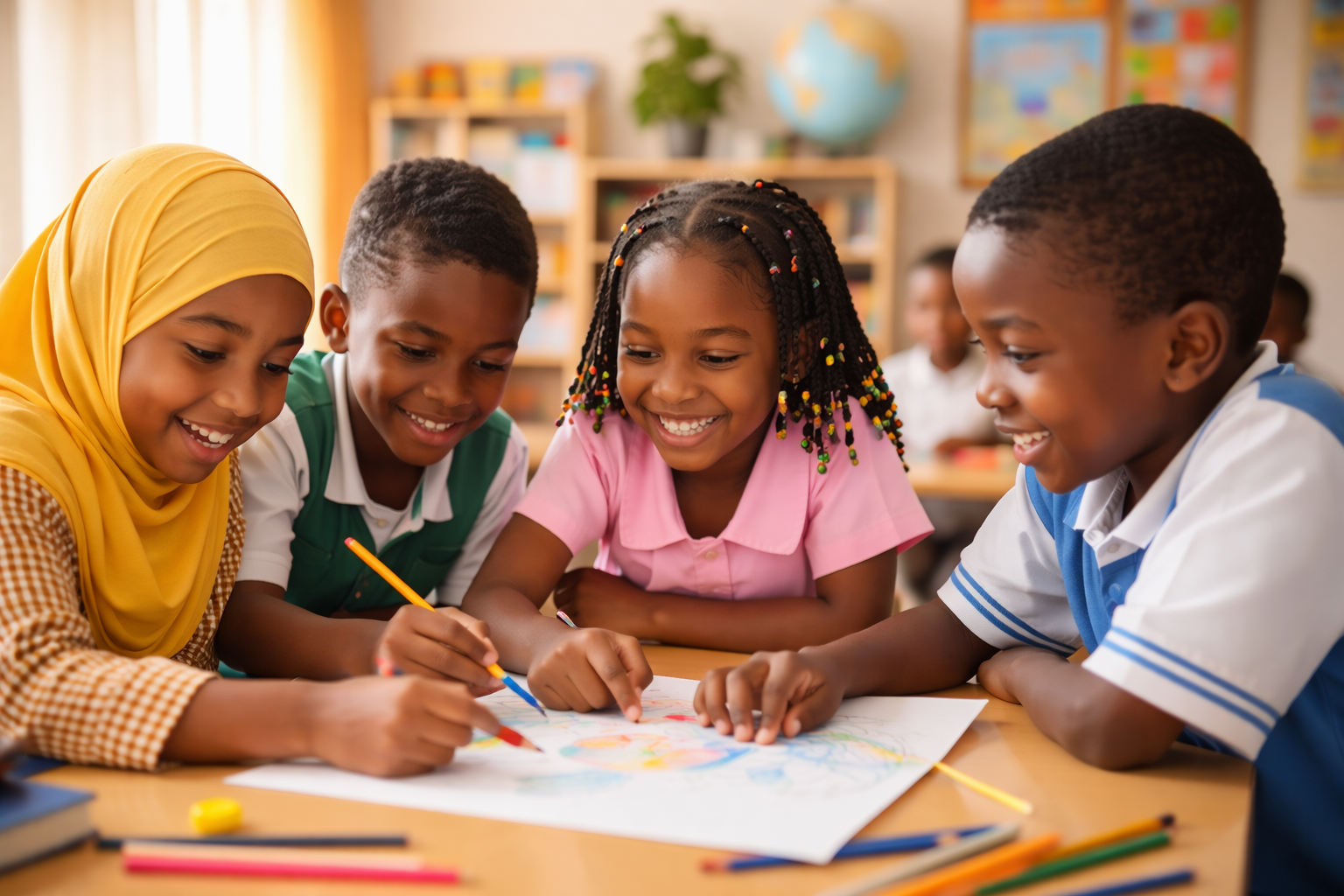
“Peace is not a one-time achievement but a daily habit, much like health. Learn how we can move beyond reactive strategies to make peace a foundation for possibility”
By Joy Ekanem-Babasola
Last month, I attended an interfaith roundtable discussion. At its core were conversations about supporting peacebuilding initiatives and exploring innovative ways to equip individuals to become peacebuilders. As the panel discussions unfolded, touching on how deeply our faith and beliefs guide these processes, I found myself wondering: “Are we educating for peace, or simply to prevent conflict and violence?”
This question led me to another: “Why do we eat?” perhaps from the breakfast I didn’t have before this meeting or the anticipation of lunch.
Most people would answer: to gain energy, to fuel the day, or simply because it’s routine. Few would say, “to prevent sickness.” We don’t eat merely to avoid illness; we eat to nourish ourselves physically, mentally, and even socially. Eating is an act of thriving.
Now, imagine peace the same way: not simply as the absence of conflict or violence, but as a condition for flourishing a way to enable growth, connection, creativity, and meaning. Peace scholars have long embraced this perspective, framing peace as something to be cultivated rather than merely preserved.
So I return to the question that sits heavily in my heart:
Are we educating for peace or simply to prevent conflict and violence?
This question carries significant implications for how we teach civic education in Nigeria especially from primary school through university.
A recent experience brought this home for me. At my kids’ school graduation ceremony a few weeks ago, my three-year-old daughter received a “Noble Prize for Peace.” Her certificate read: “Always treats people with kindness and works well with classmates.” I wondered what a three-year-old truly knows about keeping the peace.Her school head explained that, at such a formative stage, character matters more than academic excellence. They teach empathy and respect for one another and their belongings, understanding that children naturally model what they see in their environment.
I actively teach her kindness, encouraging her to speak kindly and empathise with others’ joy or pain. Although she may not fully grasp my constant corrections and ‘teachable moments’ at her age, I know observation is key to learning. In our household, we are openly emotional and accommodating of others, a practice I inherited and continue. While I sometimes worried about over-correcting, the certificate affirmed the importance of continuing to nurture the seed I’ve planted, mirroring the school’s efforts. This is essential, as you and I know some adults who still struggle profoundly to manage their own emotions, let alone accept those of others.
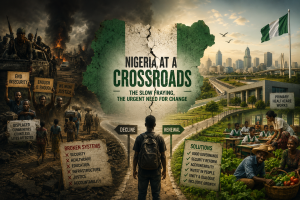
Across Nigeria, civic education is part of the national curriculum. Yet too often it’s presented as a list of instructions: obey rules, respect elders, vote in elections. These are worthy values, but they reduce civic learning to moral policing rather than a tool for critical thinking, empathy, and community-building.
True civic education, one that fosters mutual respect and peace must go deeper. It should equip learners to understand differing perspectives, manage conflict constructively, and actively participate in shaping their communities.
Like health, peace is not something you achieve once and forget. It’s sustained through daily habits, meaningful relationships, and inclusive systems. In societies where conflict is profitable and peace is reduced to a reactive strategy, peace itself risks becoming unpopular and seen as naïve, boring, or even threatening to the status quo.
Research from the Journal of Humanities and Social Science (2025) exploring peace education in Nasarawa and Benue States shows measurable improvements in non-violent conflict resolution, social trust, and youth engagement where peace education is intentionally implemented. Yet funding and implementation remain inconsistent.
In primary schools, civic education through cooperative learning and moral reasoning has proven effective in promoting tolerance and social responsibility. But many programs are under-resourced and disconnected from learners’ lived realities.
I’ve seen the long shadow of conflict myself. My husband lost his mother during the Kaduna crises over 20 years ago. He and his family still live with the fragments of that loss. Only this year, after much encouragement, did he visit Kaduna again. When I asked my father-in-law if he might ever return, he immediately said no.
I began reading about the history of the Kaduna crises. While I can never fully understand their pain or the hatred that lingers, not just for the place but for people who may not even have been directly involved, I also discovered transformative civic learning efforts in Kaduna.
Pastor James Wuye and Imam Muhammad Ashafa, once bitter enemies, now run the Interfaith Mediation Centre. Their work helped broker peace during crises in Kaduna (2002) and Yelwa-Shendam (2004) and has shaped interfaith curricula and civic dialogues nationwide.
Another example is the Jos Inter-Communal Dialogue Process facilitated by the Centre for Humanitarian Dialogue. Between 2013 and 2014, seven ethnic and religious groups met, spoke, listened, and ultimately signed a peace declaration. One line from that agreement stays with me:
“Dialogue rather than violence is the preferred means of resolving disputes.”
These initiatives reveal a deeper truth: peace must be taught not only through textbooks but through lived experience, guided facilitation, and sustained community effort.
This is not unique to Nigeria. In South Africa, the International Centre for Nonviolence (ICON) at Durban University of Technology integrates peace education into community projects and student leadership training, improving racial reconciliation and civic participation in post-apartheid communities.
In Senegal’s Casamance region, the Karuna Center for Peacebuilding partners with local educators and religious leaders to deliver early-warning programs and intergenerational dialogues. These have led to a significant drop in youth recruitment into rebel groups and created safe spaces for healing and reconciliation.
These countries invest not just in curriculum but in context, embedding civic education into the broader fabric of social development.
Despite some progress, Nigeria’s civic education faces structural barriers:
- Policy discontinuity: Each administration tends to reshape civic curricula, leading to fragmentation and loss of institutional memory. Recently, the mainstream media reported the ongoing reform of the current learning curriculum by the ministry of education. While I appreciate the vision of not overburdening students with theoretical knowledge and incorporating practical skill acquisition, I hope this progress is made continuous, as it is essential to retain what has worked, while enhancing and expanding the curriculum.
- Underqualified Educators Impede Effective Civic Learning: A significant challenge in civic education is the lack of adequate pedagogical training among teachers. Many civic educators struggle to move beyond traditional rote learning to more engaging, participatory, and values-based approaches. This is often because they themselves may not fully grasp the importance of patriotism, questioning what Nigeria offers them, and often entering the profession out of circumstance rather than choice. Consequently, lessons delivered by these teachers often lack passion and fail to inspire genuine learning, with the exception of those trained by dedicated civic organizations. A study (Brunel thesis) involving 298 civic teachers and 570 learners revealed that a substantial number of teachers were instructing subjects outside their area of specialization due to a scarcity of specialized civic education teachers. Further data from an Education Sector Analysis, cited in broader reports, indicates a widespread lack of professional development: 67.5% of teachers in public schools and 85.3% in private schools in Nigeria had not participated in any in-service training over a five-year period.
- Neglect of trauma and post-conflict healing: Few civic education efforts integrate psychosocial support or recognize the impact of past violence on learning. We often assume that because conversation and resolve have happened, people should or can heal from that alone. No, we must provide conflict healing, we see this will GBV as well
Several systemic issues impede effective peace education: - Urban-Rural Divide: A significant challenge in implementing effective peace education programs is the stark urban-rural divide. Currently, these initiatives are disproportionately concentrated in urban centers, largely neglecting rural and, crucially, conflict-affected regions. This oversight is problematic because the very communities most impacted by conflict and violence are often those with the least access to preventative and transformative peace education. To address this, programs must be meticulously designed to be context-specific, eschewing a simplistic “one-size-fits-all” approach. Recognizing the diverse cultural, socio-economic, and political landscapes of different areas is paramount. This means moving beyond generic curricula and developing tailored interventions that resonate with local needs, values, and existing community structures. Furthermore, outreach efforts must be significantly enhanced to ensure equitable distribution of resources and opportunities for peace education across all geographical areas, especially those most vulnerable to instability.
Meanwhile, the conflict economy where violence benefits certain actors continues to outpace the peace economy. Without a long-term strategy to make peace attractive, rewarding, and embedded in education, the gains we make remain fragile.
So, what might an education system designed for peace and mutual respect look like?
From the earliest grades, education must lay the groundwork for peace. This means immersing learners in narratives of cooperation and shared success, exploring diverse cultures, and developing social-emotional skills. Through interactive role-playing exercises, children can cultivate empathy by stepping into different perspectives. Active listening, a cornerstone of peaceful communication, should be taught and practiced, enabling students to truly hear and understand one another.
Secondary schools should build on this foundation with experiential learning that bridges theory and practice. Robust community service programs can foster a sense of shared responsibility. Structured dialogues on complex issues can teach students to engage respectfully with dissenting viewpoints. Simulations of conflict resolution, from interpersonal disputes to international negotiations allow them to practice mediation, negotiation, and de-escalation skills.
At the university level, the commitment to civic action and intergroup learning should be mainstreamed across all faculties not confined to the humanities. Engineering students can explore design thinking for social impact; business students can examine ethical supply chains; medical students can study health equity. By weaving peace education principles throughout academia, we can cultivate a generation of professionals who are technically skilled, socially conscious, and ethically grounded.
Teachers are the linchpin in this transformation. They need specialized training in trauma-informed approaches to recognize how adversity affects learning and behaviour. By creating safe, supportive classrooms, schools can function not only as centres of academic instruction but also as spaces of healing and resilience. Investing in teacher training is an investment in students’ holistic well-being and in the future of peace.
Above all, young people must be empowered not just to follow rules but to question them, reshape them, and imagine better futures.
Rather than continuously viewing civic education as a mechanism to manage people into raising generations skilled at compliance, not collaboration, we can reimagine education for peace anchored in mutual respect, empathy, and shared responsibility, standing a chance of transforming not just our schools but our society.
As we teach children to sing the national anthem, identify the colours of the flag, spell “unity,” and define “democracy,” we must also show them how to disagree respectfully, listen deeply, and live peacefully. We must make peace not a reaction to violence but a foundation for possibility.