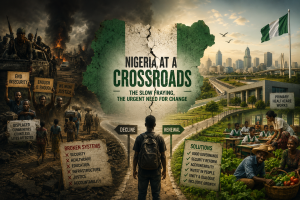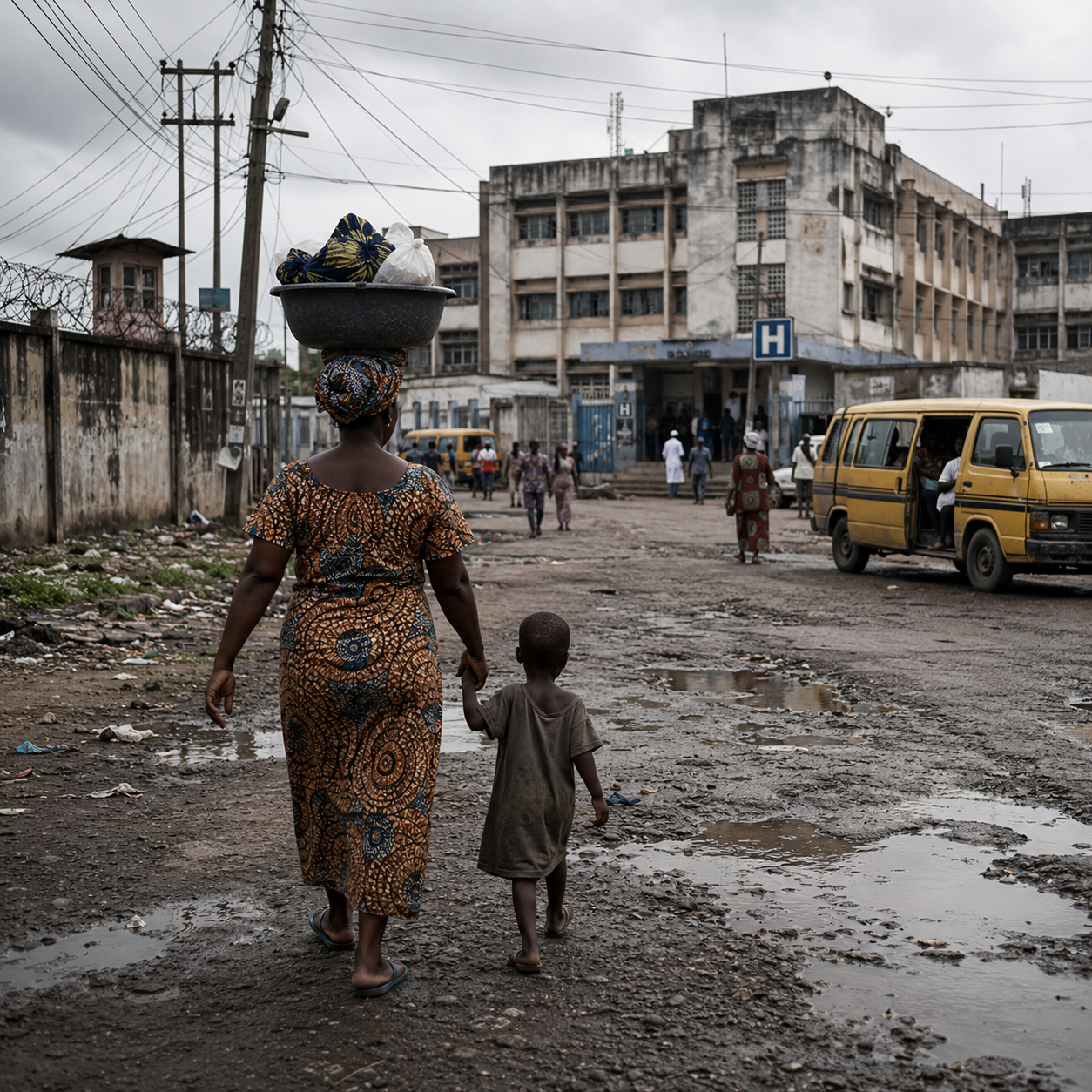
You learn early that governance here is mostly a rumour.
Something you hear about in speeches, campaign posters, and Independence Day broadcasts.
Something that rarely shows up when it matters.
Cynthia Akamere
Nigeria is not for beginners.
Not because her people are difficult.
Not because her cultures are too layered or her languages too many.
Nigeria is not for beginners because survival has become a skill.
One you are expected to master quietly.
To wake up every day and calculate risk before hope.
Before movement.
Before belief.
You learn early that governance here is mostly a rumour.
Something you hear about in speeches, campaign posters, and Independence Day broadcasts.
Something that rarely shows up when it matters.
A country where the common man lives on alert.
Watching the road for potholes that can swallow a car.
Watching the night for sounds that should not be there.
Watching the news with clenched teeth, waiting to recognize another name that looks like home.
Lives are lost, and the state clears its throat.
Properties are destroyed, and investigations are promised.
Then silence.
The kind that teaches citizens to mourn privately and move on quickly.
Take Nanya.
Bitten by a snake.
A preventable tragedy, if systems worked the way they are supposed to.
If emergency response meant more than good intentions.
If healthcare was not a gamble disguised as service.
Her story is not rare.
It is just the one that reached us.
Because in Nigeria, illness is a negotiation.
Between how much pain you can endure and how much money you can raise.
Between whether the hospital has power today.
Whether the doctor is available.
Whether the drugs are real.
And somewhere between these questions, people die.
Not always from disease, but from delay.
From indifference.
From a system that has stopped asking if it is effective.
The Ministry of Health releases statements.
Hospitals continue to decay.
Oversight becomes optional.
Accountability becomes ceremonial.
Then there is the other sickness.
The kind that wears suits.
Allegations of stolen public funds surface.
Names trend.
Investigations stall.
And somehow, some of these names return to public life polished.
Rebranded.
Decorated with titles that represent all of us.
When a man alleged to have mismanaged public resources can stand as a symbol of Nigeria abroad, it sends a message.
Not subtle.
Not accidental.
It says integrity is negotiable.
It says consequences are selective.
It says the suffering of millions can be outpaced by proximity to power.
Meanwhile, the common man is told to be patient.
To endure.
To pray.
But patience does not stop bullets.
Prayer does not fix roads.
Endurance does not replace policy.
Nigeria is not for beginners because the citizen must do everything the state refuses to do.
Protect themselves.
Educate themselves.
Fund their own safety.
Crowdfund their own survival.
And still be told they are lucky to be here.
This is not an attack on Nigeria.
It is a plea for her.
Good governance is not a favour.
It is a responsibility.
Protecting lives and property is not an aspiration.
It is the minimum.
We deserve institutions that work when no camera is present.
Hospitals that heal.
Justice that remembers.
Leaders who understand that representation is not decoration.
Nigeria is not for beginners.
But she should not be this hard on her own people.
To say this out loud is not unpatriotic.
It is necessary.
Because silence has never fixed a country.