The geo-politics of intervention
Cynthia Akamere
Intervention in geopolitics rarely introduces itself as intervention. It arrives wearing other names. They invoke noble principles: democracy, human rights protections, stability, and international law. States seldom describe their actions as an intrusion into another nation’s sovereignty. Instead, intervention is framed as responsibility, crisis management, or the defence of international order. Yet beneath these justifications lies a quieter reality: power projecting itself beyond borders, reshaping political outcomes, economic systems, and governance structures in ways that are rarely neutral.
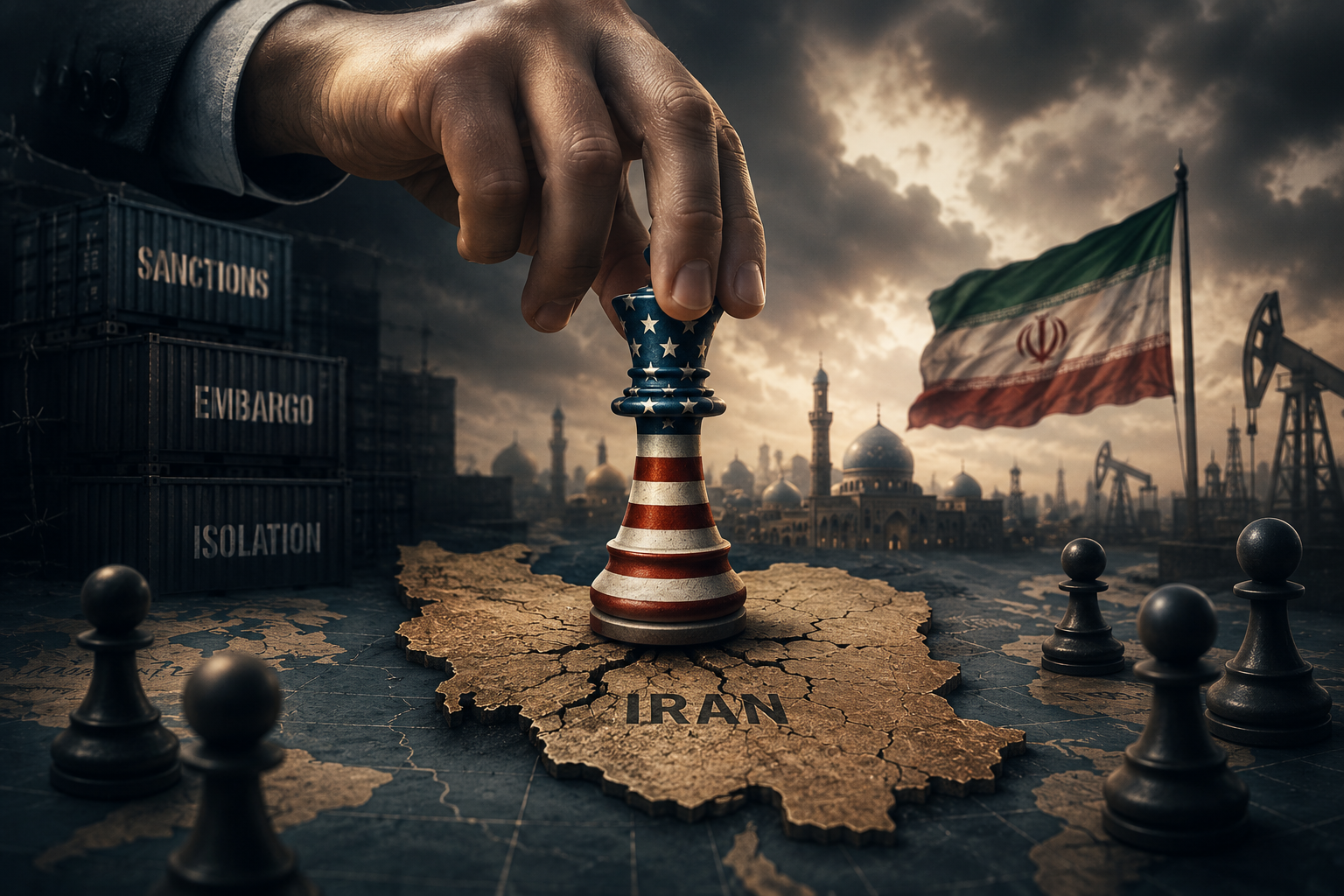
This is the enduring disguise of geopolitical intervention. It operates through sanctions rather than soldiers, through diplomatic pressure rather than direct occupation, through financial isolation rather than visible force. The language is careful, even moral, but the consequences are unmistakably political. Institutions bend under external pressure, economies recalibrate around restrictions, and societies absorb the long shadows of decisions often made far beyond their borders, and finally Citizens with lived reality often tells a different story: economic collapse, institutional breakdown, civilian casualties, and decades-long instability.
The challenge, then, is not simply to identify intervention when it occurs. It is to understand how it is framed, justified, and normalized within global politics. Because in the modern international system, intervention rarely announces itself as domination. More often, it appears as governance, responsibility, or justice, even as it quietly reorders power.
Iran as a Case Study in Power, Governance, and Global Consequence
There is a persistent tension at the heart of modern geopolitics. It is the belief that power enforces justice across borders. That the act in itself, when framed properly in a morally right political language, becomes legitimate governance. The relationship between the United States, Venezuela, and Iran offers one of the clearest case studies of this idea in practice.
This paper examines the U.S.-Iran dynamic through the lens of intrusive justice and governance. By intrusive justice, I mean the use of external pressure, coercive diplomacy, sanctions, or military involvement to shape another state’s internal political order under the justification of security, democracy, or human rights. This is not to fault right or wrong in this situation, rather pose a central question which is simple but uncomfortable; when does external intervention stabilize a region, what are the ripple effects on these interventions, and when does it fracture institutions, economies, and societies in ways that endure for generations?
Modern U.S. Iran tensions are inseparable from the events of 1953, when the CIA and the British government supported the overthrow of Iran’s democratically elected Prime Minister, Mohammad Mossadegh. The operation, often referred to as Operation Ajax, restored the authority of Mohammad Reza Pahlavi. It was justified within Cold War logic as necessary to prevent Soviet influence and secure oil interests.
But inside Iran, the narrative was different. It was viewed as a foreign intrusion into sovereignty. A precedent was set: governance could be shaped externally when it aligned with strategic interests.
The 1979 Islamic Revolution overturned the Shah and replaced the monarchy with a theocratic republic under Ruhollah Khomeini. The U.S. embassy hostage crisis that followed cemented hostility. From that point onward, distrust became institutional.
The pattern that emerged is instructive. Intervention produces backlash. Backlash produces securitization. Securitization justifies further intervention. The cycle hardens.
Sanctions as Instruments of Intrusive Justice- Sometimes power does not arrive with soldiers, sometimes it arrives through the banks.
In the modern international system, sanctions have become one of the most powerful instruments of global intervention. They operate quietly but decisively. A government does not need to cross a border to influence another state’s behavior; it only needs to restrict access to financial systems, trade routes, energy markets, or global institutions. In this way, sanctions function as a form of intrusive justice, a mechanism through which powerful states attempt to discipline or redirect the policies of others without direct military confrontation.
Sanctions are often framed as the ethical alternative to war, a diplomatic tool designed to pressure governments while preserving international stability. But in practice, their effects extend far beyond the leadership they seek to influence. They reshape economies, strain institutions, disrupt trade networks, and alter the social realities of ordinary citizens who must navigate inflation, unemployment, and scarcity.
The growing reliance on sanctions raises a deeper geopolitical question: when economic pressure becomes the primary instrument of global intervention, does it promote accountability and governance reform, or does it simply relocate the costs of geopolitical conflict onto societies already navigating fragile institutional systems?
This tension sits at the heart of contemporary geopolitics. And nowhere is it more visible than in the prolonged sanctions regime imposed on Iran, where the intersection of global power, governance pressure, and national resilience continues to shape both regional stability and the evolving architecture of international order.
Over the past four decades, the United States has relied heavily on economic sanctions as a tool of governance pressure against Iran. These measures intensified around concerns over Iran’s nuclear program, culminating in negotiations that produced the Joint Comprehensive Plan of Action in 2015.
The agreement limited Iran’s nuclear activities in exchange for sanctions relief. When the U.S. withdrew in 2018 under President Donald Trump, sanctions were reinstated and expanded under a “maximum pressure” strategy.
From a policy standpoint, sanctions are often framed as a nonviolent alternative to war. They are presented as targeted tools designed to change state behavior without military invasion. But their effects are rarely confined to elites.
The Hidden Cost of an Arm and a Leg: social Impacts on citizens
Geopolitical battles are often narrated through the language of states. Presidents speak, diplomats negotiate, sanctions are announced in technical formal statements, but the real story of geopolitical intervention rarely unfolds in government buildings, it unfolds in ordinary homes.
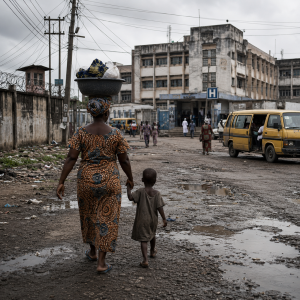
For citizens, the consequences arrive slowly, and sometimes rapid. Currency loses value overnight, Imported medicine becomes difficult to find, migration access is limited, Inflation creeps in on consumer goods. A small business that once depended on international trade suddenly closes its doors. The language of sanctions and foreign policy may sound abstract, but its effects are intensely personal. They shape how families eat, work, migrate, and imagine their future.
This is the human dimension of geopolitical intervention that policy debates often overlook. While sanctions are designed to influence governments, their pressure rarely stops at the doors of political elites. Instead, it spreads across society, altering livelihoods, widening inequality, and placing the weight of global political disputes on citizens who have little influence over the decisions that triggered them.There is a paradox here. Sanctions seek to weaken state behavior, yet they can consolidate internal hardliners who use external threat narratives to justify domestic control. Citizens, caught in between, experience declining living standards while political rigidity deepens.
Understanding this social impact is critical, because when geopolitical intervention becomes embedded in everyday life, it does more than reshape economies or institutions, it reshapes the relationship between citizens, their governments, and the international system itself.
Intrusive justice reshapes institutions in subtle ways. Firstly, it strengthens security sectors. When a state faces sustained external pressure, military and intelligence bodies gain prominence. Civil institutions often lose influence. In Iran’s case, entities such as the Revolutionary Guard have expanded their economic and political reach under sanction conditions.
Secondly, prolonged isolation reduces institutional transparency. Sanctions complicate international banking, restrict compliance systems, and foster informal financial networks. Governance becomes opaque not only by design but by necessity.
Thirdly, external pressure reduces reform incentives. When external actors are perceived as hostile, domestic reformists are framed as compromised or naive, which serves two purposes 1. delegitimize internal opposition by associating it with external interference, 2. strengthen hardline political factions, who often position themselves as defenders of independence. As a result, in politically tense environments, reformist voices are often marginalized not necessarily because their ideas lack merit, but because geopolitical pressure makes compromise appear politically risky or even unpatriotic which eventually shrinks the political landscape.
Geopolitics conflict rarely stays contained in the borders of the states involved, the first fracture of conflicts often appears in global trade as we have seen between the war against Ukraine and Russia, and Iran is no exception. Within the past few days, shipping routes have tightened, uncertainty in energy supplies, insurance premium rises and so on. The positioning of Iran occupies a strategic position in global energy markets and near critical maritime routes such as the Strait of Hormuz. Tensions between Iran and the United States influence global oil prices, shipping insurance rates, and regional stability.
Sanctions have constrained Iran’s oil exports, affecting global supply chains. When tensions escalate, markets respond almost immediately. Energy-importing countries face higher costs, Insurance premiums for maritime transport rise, Regional economies dependent on stable Gulf trade corridors feel the strain.
Beyond economics, proxy conflicts in countries such as Iraq, Syria, and Yemen reflect broader geopolitical competition. Intervention in one state ripples across others. Regional governance becomes fragmented as alliances shift and armed non-state actors gain leverage.
From the lenses of norms and precedent, intrusive justice also raises normative questions. If powerful states can unilaterally withdraw from multilateral agreements, as occurred with the JCPOA, what signal does that send about the durability of international commitments? At the same time, Iran’s own regional policies and nuclear ambitions create legitimate security concerns for neighboring states and global actors. The issue is not one-sided morality. The issue then becomes a contested legitimacy, who and who is allowed to own advanced weaponry.
This is where geopolitics becomes complicated. States justify intervention in the language of stability and security, targeted states justify resistance in the language of sovereignty and dignity, both narratives carry internal logic.
Over time, intrusive justice can produce structural economic distortion:
- Increased reliance on informal or shadow economies
- Currency volatility and reduced foreign direct investment
- Brain drain as skilled professionals emigrate
- Reduced institutional integration into global financial systems
Socially, prolonged tension shapes generational attitudes. Younger populations grow up within narratives of siege or hostility. Diplomatic trust becomes harder to rebuild.
The irony is difficult to ignore. Policies intended to moderate behavior may radicalize perceptions. Pressure meant to protect global order may destabilize regional systems. How do we then maintain a balanced governance?
Towards a balanced governance
A sustainable policy approach must reconcile three realities:
- Sovereignty matters deeply in regions with histories of external interference.
- Security concerns about nuclear proliferation and regional destabilization are legitimate.
- Citizens should not be the primary casualties of geopolitical rivalry.
Historical precedent suggests that negotiated frameworks, such as the JCPOA, though imperfect, provide measurable constraints and verification mechanisms. Multilateral engagement through institutions such as the United Nations and regional security forums may reduce unilateral escalation.
Policy adaptation could include:
- Targeted sanctions tied to specific, verifiable benchmarks
- Humanitarian carve-outs that are operationally accessible, not merely symbolic
- Confidence-building measures in maritime security
- Incremental diplomatic engagement to restore institutional trust
The goal should not be naive normalization, nor should it be perpetual coercion. It should be strategic stability grounded in enforceable agreements and reciprocal accountability.
The tension between the Middle East and the United States, viewed through the Iranian case, reveals the limits of intrusive justice. External power can shape outcomes, but rarely without consequence.
Intervention leaves institutional imprints, sanctions reshape economies, citizens absorb shocks long before leaders do, and global markets respond to every tremor and global turbulence.
The deeper question is not whether states will pursue influence. They always will. The question is whether governance strategies can move beyond cycles of pressure and retaliation toward frameworks that preserve dignity, security, and institutional resilience at the same time.
That balance is difficult, perhaps even fragile, but without it, geopolitics becomes less about justice, and more about endurance.