In the recent words of Oge Onubogu, a Senior Fellow and Director Africa program “Approaching dialogue from a place of honesty can go a long way in resolving so many issues”
Cynthia Akamere
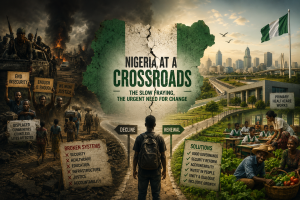
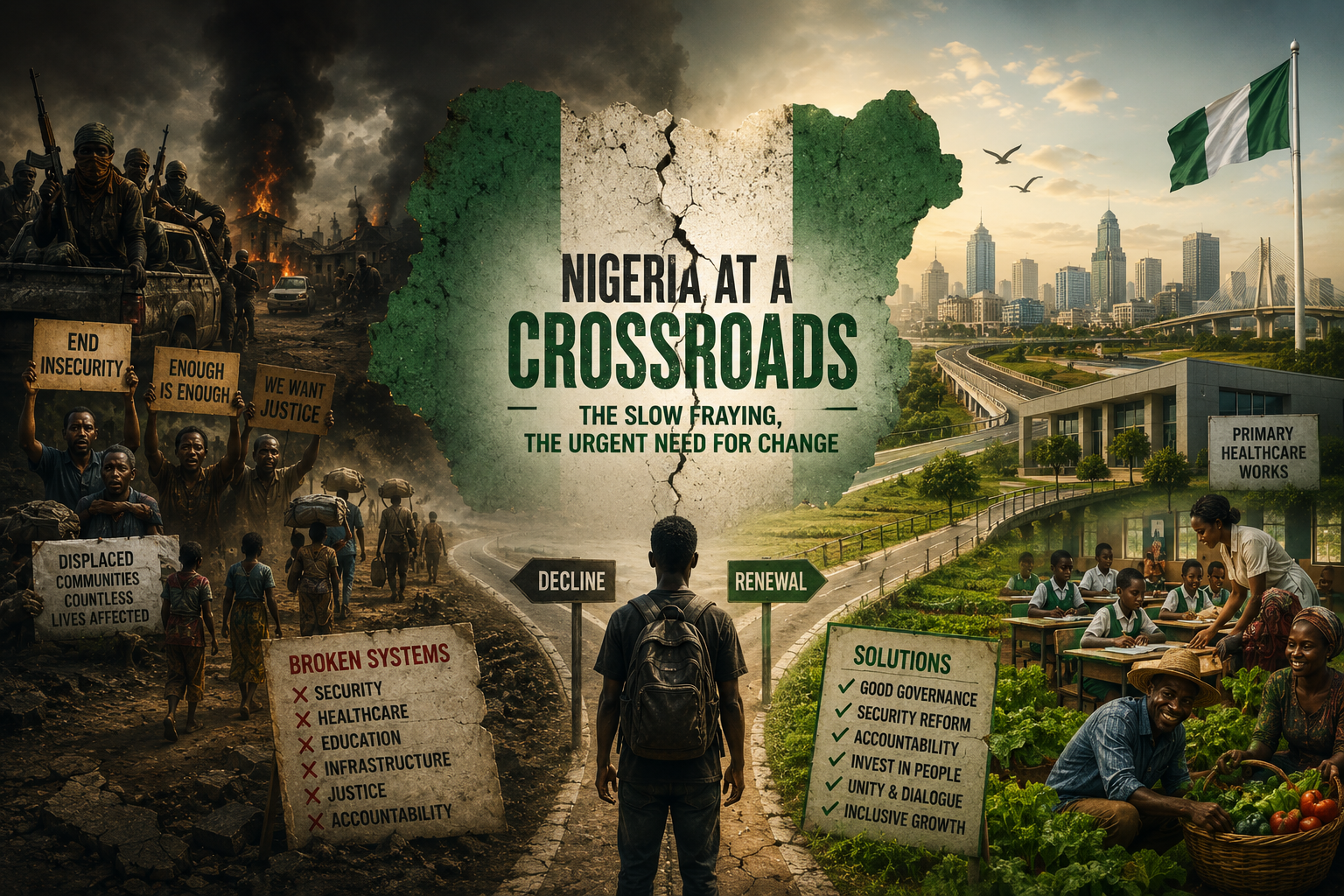
There are days when a country feels like it is balanced on a thin line, and if one is being honest, Nigeria has lived on that line for a long time. Anyone watching the situations closely would notice the way small failures in one village ripple all the way to the capital, and how the big failures in Abuja sink straight into rural soil. It is all connected, even when it does not look like it at first glance.
Maybe, just maybe that is why everything feels fragile. Because governance hasn’t collapsed in one spectacular moment, rather, it has frayed quietly, thread by thread.
The Slow Fraying unfolding before our Eyes
Nigeria faces a profound security crisis that has transformed from isolated incidents into a multifaceted threat engulfing virtually every region of the country. From Boko Haram’s insurgency and ISWAP’s terrorism in the Northeast to widespread banditry and kidnapping in the Northwest, separatist agitations and cultism in the Southeast, and farmer-herder clashes across the Middle Belt, insecurity has become the defining challenge of Africa’s most populous nation. The violence has displaced millions, crippled agricultural production, disrupted education, and strained an already fragile economy, while security forces remain stretched thin and unable to stem the tide of attacks that claim lives daily. What was once a nation of relative stability has descended into a landscape where citizens live in fear, communities are abandoned overnight, and the very fabric of national cohesion threatens to unravel under the weight of armed groups operating with alarming impunity.
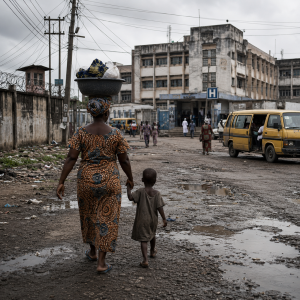
The problems are enormous, and anxiety has struck the mind of citizens on what could happen next. While we deliberate and debate policies on morning radios and social media, farmers in remote communities are staring at an empty field they used to cultivate without fear. And when farmers are too afraid to farm, it doesn’t stay a local problem for long, it grows into a national food crisis. Travellers are scared of embarking on a road trip for fear of kidnapping. Or consider infrastructure, when a rural health center can’t keep the lights on, these are not just inconveniences, It’s a future maternal mortality case waiting to happen. And at the national level, Abuja debates health sector reforms, but the reality on the ground is that workers sometimes use phone flashlights for deliveries. This is the kind of news that should be shocking, but sadly isn’t anymore.
Then there’s trust or the fast erosion of it. Citizens watch politicians argue over budgets, partisan politics, party thuggery and leadership, demolitions of businesses and properties on the disguise of land allocation and many other problems that remain a non priority of what the country is currently facing.
Nigerians have endured so much in the hands of its government, she has been asked to ensure, wait and adapt because changes cannot happen over time, even as roads that were promised three administrations ago remain half-done. People adapt, of course they do, but a country can only run on improvisation for so long before exhaustion sets in.
When institutions falter, daily lives trembles because the fragility is felt everywhere across borders, given the case of the US congress on the 20th of November, currently reviewing Nigeria as a country of concern, holds press conferences and house meetings on the current alleged genocide in Nigeria with witnesses testifying to the horrors they have experienced. A sad note indeed!!!
A police raid that goes wrong in the capital, has a way of spiraling into a national reckoning about how law enforcement really operates. A fuel shortage in Lagos quietly sets off price shocks in markets hundreds of miles away. And when the courts deliver a ruling whether in the long-running case of Mazi Nnamdi Kanu or in the prosecution of an ISWAP leader, it becomes less about the individuals involved and more about whether the justice system can hold steady under pressure.
Even the silent stories carry weight. Communities displaced by violence, some describing it as targeted attacks or worse, now crowd into makeshift camps, unsure when they can return home. Their daily struggle is a reminder that security failures don’t end where the headlines fade; they spill into classrooms, markets, and local economies.
Even the recent public frustration surrounding controversial pardon lists reminds citizens that justice in Nigeria often bends before it breaks. People notice. Maybe they don’t always protest, but they talk. They weigh the system quietly. And once faith in the system gets low, rebuilding it becomes a long journey.
All these moments, different as they seem, are really symptoms of the same fragility, a system where local crises ripple outward until they touch everyone.
Still, the way forward isn’t mysterious, Nigerians believe solutions exist. In my opinion as a individual and a policy analyst, I would warn against consistently cautioned against framing Nigeria’s insecurity as “genocide” or a strictly religious conflict, such labels oversimplify a crisis driven by deeper governance failures, historical grievances, criminality, extremism, and competition over resources. While religious identity often shapes how violence is interpreted, it is rarely the sole driver, and reducing it to Christian persecution risks distorting the policy response. The call for foreign, especially military intervention could unintentionally worsen tensions and endanger the very communities they seek to protect. Instead, we should advocate for long-term, holistic engagement: strengthening governance and institutional weaknesses, supporting moderate leaders, partnering with local authorities, and engaging diverse faith communities. Nigeria still struggles to build a shared national identity grounded in dignity and rights, and that without structural reform, displacement, communal violence, and insecurity will continue to deepen. And to be honest, the country does need a governance culture that rewards competence, not just political loyalty. When technical roles are filled with technical people, things improve. It is almost boring how predictable that is.
What Civil Society Can Really Do (Without Sugarcoating Anything)
Civil society groups often get romanticized as miracle workers. They aren’t. They’re overstretched, underfunded, and sometimes struggling to stay alive. But they remain one of the few checks people can still rely on.
Their role? It’s more practical than heroic. They can document abuses clearly, consistently. They can train communities to demand accountability from local officials rather than waiting for change from Abuja. They can push for laws that strengthen oversight institutions. They can shine uncomfortable spotlights on procurement processes, security failures, and public health neglect. And perhaps most importantly, they can translate national issues into everyday language that ordinary people can connect with.
The real strength of civil society isn’t in dramatic protests. It’s in persistence month after month, year after year until reforms that once felt impossible suddenly start looking inevitable.
A Fragile country can still recover, Nigeria’s fragility isn’t a terminal diagnosis. It’s more like a chronic condition that demands long-term care. And weirdly, moments of national tension sometimes expose the fact that people still believe things can get better. They wouldn’t complain so loudly if they didn’t care.
The path forward is slow, sometimes painfully so, but it does exist. It begins with stronger local governance, real institutional reform, steady pressure from civil society, and a political class that is pushed, not begged into prioritizing the country over personal networks and loyalty.Fragility is real, so is resilience. And if both are honest with each other, something steadier might eventually emerge. In the recent words of Oge Onubogu, a Senior Fellow and Director Africa program “Approaching dialogue from a place of honesty can go a long way in resolving so many issues”