Every organisation begins with a reason, though not every founder stops long enough to ask what that reason really is. Jude Ilo sets out to help those of us in Africa’s civil Campaign Costs Money!!! Does legitimate campaign financing exist in Nigeria’s political landscape?
In 2014, at a TEDxEuston event, Nigeria’s former Minister of Finance, Ngozi Okonjo-Iweala, raised a question that remains remarkably relevant to Nigeria’s political landscape today: How do we finance democracy? In her talk, Don’t Trivialise Corruption, Tackle It, she challenged African societies to look beyond the familiar conversations about corruption and begin examining some of the structural conditions that make it possible. One of these, she argued, is the way political parties and candidates finance their elections.
Her argument was straightforward, elections cost money. Campaigns require resources, political parties need to organise, and candidates must reach millions of voters. But when legitimate and transparent sources of campaign funding are absent or inadequate, politicians may turn to wealthy individuals and private interests who expect something in return. That expectation can eventually take the form of government contracts, political appointments, privileged access or influence over public decisions.
More than a decade later, the question Okonjo-Iweala posed has become even more urgent as the election cycle approaches. The cost of political participation remains a subject of concern, and the Electoral Act 2026 has introduced significant changes to campaign spending limits and political-finance regulations.
Beyond the legislation, a more fundamental question persists: If democracy is meant to serve the people, why should the ability to finance a political campaign have such a significant influence on who gets the opportunity to govern them?
This is not simply a question about the money politicians spend. It is a question about who holds political power, whose interests are represented and whether the democratic process can deliver accountability and good governance when the journey to public office is itself financially dependent on powerful private interests.
To understand the relationship between election financing and governance in Nigeria, it is important to examine the role of political financiers and the expectations that may accompany their contributions. The Electoral act of Nigeria approves 10 billion naira as the maximum spend on campaign for political parties who are vying for political positions. Political parties and candidates rely on different sources of funding, including personal resources, membership contributions, private donations and support from wealthy individuals. There is nothing inherently undemocratic about private citizens contributing to political campaigns. Indeed, political participation often involves people pooling their resources behind candidates and ideas they believe in.
The challenge emerges when financial contributions create relationships of obligation that extend into the exercise of public office.
In Nigeria, this conversation is often associated with godfatherism, a political arrangement in which influential individuals provide financial, logistical and political support to candidates, sometimes in exchange for substantial influence over their decisions after assuming office. It then becomes a relationship between elected officials and their sponsors.
As Okonjo-Iweala observed in her TEDxEuston address, it is corruption when a businessperson supports a politician in exchange for undue access to contracts or public resources. Her argument is particularly important because it locates the origins of some forms of corruption before a politician even assumes office.
This is an important distinction. Corruption is frequently discussed as something that happens within government departments, procurement processes or the management of public funds. If the political relationships that facilitate corruption are established during election campaigns, then addressing corruption requires us to examine the financing arrangements that precede electoral victory.
The consequences can be far-reaching. A public official who feels indebted to a financier may find it difficult to make decisions independently, particularly when those decisions conflict with the interests of the individual or network that supported their political journey.
Public contracts may be awarded based on political loyalty rather than competence or value for money. Appointments may prioritise political obligations over merit. Public policy may be influenced by private interests rather than the needs of citizens. Not every political donation creates this kind of relationship, and the existence of a donor does not itself establish corruption. The concern is the lack of transparency, undue influence and the absence of effective safeguards against conflicts of interest.
Examining whether an elected official is accountable primarily to the citizens who voted for them or to the individuals and networks that financed their electoral success remains a critical conversation that needs to be addressed.
The Voter is not always the villian
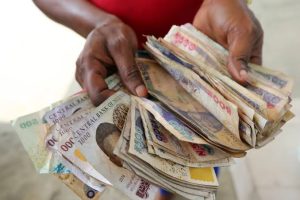
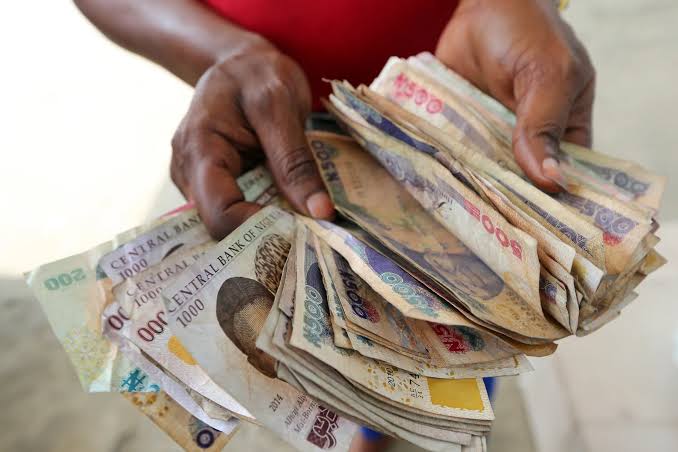
During Nigerian elections, vote buying is often discussed as evidence of declining political consciousness or a failure of civic responsibility. Political actors distribute cash, food, clothing and other material incentives in exchange for electoral support. The practice is illegal, undermines electoral integrity and weakens the principle of free political choice.
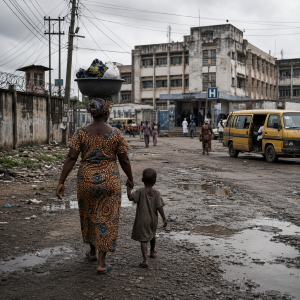
However, the tendency to blame voters alone overlooks the economic realities within which these transactions take place. For a household struggling to afford basic necessities, a small cash payment may have immediate practical value. A voter who is uncertain about how to pay for food, transportation or school expenses may perceive an election-day inducement as an opportunity to address an urgent need, even if the longer-term consequences are harmful.
Michael Bratton’s research, Vote Buying and Violence in Nigerian Election Campaigns, provides an important foundation for understanding the use of material inducements and coercive strategies in Nigerian electoral politics. His work highlights how vote buying has become part of the strategies employed by political actors to mobilise electoral support.
Research on vote buying across Africa, including the work of Eric Kramon, also helps explain why these transactions cannot be understood solely as a matter of individual voter morality. Political exchange is shaped by economic circumstances, relationships between voters and politicians, expectations of government responsiveness and perceptions of access to public resources. This does not excuse vote buying or remove responsibility from those who engage in it. Rather, it invites a more complete understanding of the problem.
When political participation takes place in an environment characterised by poverty, unemployment and limited access to essential services, the promise of immediate material assistance can become more persuasive than a candidate’s long-term policy commitments. As in the case of Nigeria using the NBS MPI data, the poverty index put Nigeria at 62.9% of the population living in multidimensional poverty. The danger this poses becomes that electoral choices become increasingly transactional. Instead of evaluating candidates based on their competence, integrity, public-service record or proposed policies, voters may be encouraged to prioritise immediate benefits.
The responsibility for addressing this problem cannot rest on voters alone. Political parties, electoral institutions, government and civil society all have roles to play in strengthening civic education, protecting electoral freedom and addressing the socioeconomic conditions that make material inducements attractive. It is difficult to build a democracy around long-term accountability when citizens are forced to make political choices under the pressure of immediate economic survival.
Christopher Nwangwu’s 2025 study, Political Financing and Vulnerability: Social Protection and Election Campaign Financing in Nigeria, explores the relationship between political finance, socioeconomic vulnerability and the risks associated with opaque funding arrangements. It contributes to the growing body of research examining how political financing can create opportunities for powerful interests to influence democratic institutions. The wider concern is that campaign finance can become part of a cycle in which political power and private wealth reinforce one another.
This cycle is not inevitable, but it illustrates how opaque political finance can create conditions for state capture. State capture occurs when powerful private interests gain disproportionate influence over public institutions, policies or decisions to serve their own interests.
The implications for good governance are significant. When public decisions are influenced by private obligations, the principles of transparency, accountability, fairness and responsiveness are weakened. Citizens may find that public resources are being allocated according to political relationships rather than public need.
For a country such as Nigeria, where public resources are essential to addressing infrastructure deficits, unemployment, insecurity, education and healthcare challenges, the diversion of political decision-making towards private interests can carry a substantial developmental cost.
The problem is therefore not limited to the integrity of elections. It concerns the quality of governance that emerges from them.
I am not here to proffer another set of solutions. To be very honest, we already know many of them. They have been written about, debated in policy rooms, presented at conferences, recommended by scholars, civil society organisations and institutions, and repeated across successive electoral cycles. What has increasingly become difficult is not knowing what should be done, but creating the political will and institutional conditions to actually do it.
As the 2027 elections draw closer and our streets, television screens, phones and social media feeds become increasingly crowded with campaign posters, promises, slogans and political messages, I want us to look beyond the campaign material for a mome
Ask yourself , Does legitimate campaign financing truly exist within Nigeria’s political landscape, and if it does, what does it look like?
How does the way political campaigns are financed affect me?
It affects the cost of the election you are watching. It affects who can afford to contest and whose voice gets heard. It can affect the relationships a politician carries into public office, the interests that gain access to government and, ultimately, the decisions that are made with public resources.
Perhaps the money that finances an election does not feel like a personal issue when we encounter it as a campaign poster on our street or a convoy passing through our neighbourhood. But political finance does not end when the posters come down. Its consequences can follow us into the classroom, the hospital, the road, the workplace, the tax system and the public services we depend on.
So as we approach another election, perhaps the conversation should not only be about who is contesting, who will win, or what they have promised us.
We should also pause and ask: Who financed the journey to the ballot? What expectations might accompany that financing?
I do not have a neat answer to these questions, I am not sure anyone does. But perhaps the need to know is important, because sometimes, before we demand better governance, we need to look more carefully at the political system that produces those who govern us. Before we allow another election to pass us by in a sea of posters, promises and political slogans, perhaps we should spend a little more time asking where the money behind the politics comes from, where it goes, and ultimately, who pays the price.
I end on the note, Go get your PVC and perform your civic responsibility, the country belongs to us all….!!!!