“Mercy, Morality, and the Meaning of Justice: Reflecting on Nigeria’s Recent Presidential Pardons”
By Cynthia Akamere
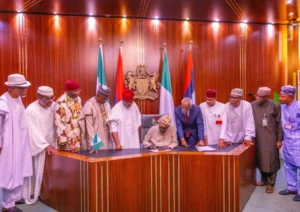
Just recently, President Bola Ahmed Tinubu has reviewed the presidential pardon list, especially concerning the controversy stirred by public opinion regarding the pardon granted to Maryam Sanda, who was sentenced to Death in 2020 for killing her husband Bilyaminu Bello. Her Sentence however, has been reduced to 12 years of jail term.
There’s a strange quiet that follows a presidential pardon. For some, it sounds like grace, the soft closing of a door on past mistakes. For others, it rings like a gavel striking twice: first for the crime, then for the insult of erasing it. For others, it echoes as a warning, that justice in Nigeria still bends, sometimes too easily, under the weight of politics and sentiment.
Nigeria’s latest round of clemency, has stirred dimensions of moral noise. Should mercy be blind to the crime? When does mercy stop being a virtue and start feeling like a betrayal?
When President Bola Ahmed Tinubu released a list of 175 beneficiaries under the Prerogative of Mercy last month, it sparked not celebration but controversy. Among the names was Maryam Sanda, convicted in 2020 for the murder of her husband , a case that captured national attention.
The backlash was swift. Civil society groups, victims’ advocates, and ordinary citizens voiced disbelief that individuals convicted of murder, corruption, or serious drug offences could be cleared without transparent justification. “This kind of clemency risks sending a dangerous message that the powerful are never truly accountable,” one human rights lawyer told The Guardian Nigeria.
The criticism was not a rejection of mercy itself , Nigerians are not strangers to pardon , but of selective Justice. The Guardian reported widespread frustration over the opacity of the process and the perceived lack of moral criteria behind the choices.
Mercy Without Justice?
The Constitution is clear enough. Section 175 gives the president authority to pardon, commute, or remit punishment. Yet clarity in law isn’t the same as clarity in conscience. The moral problem sits in the gap between the two. Should the power to forgive, a deeply personal act, belong to a political office? And if yes, under what principles? These aren’t abstract questions. They determine how justice feels to those who suffered loss, to those still serving sentences, and to a public already weary of selective fairness.
Consider the reaction to the Ogoni Nine pardon earlier this year. Rights groups rejected the move, arguing that those executed under military rule deserved exoneration, not forgiveness. The line between mercy and moral erasure is fine , and easily crossed.
When a pardon lacks transparency, it can feel like the state is rewriting history to suit itself.
To the administration, the pushback did not go unanswered. Within a week, the media reported that the Attorney-General of the Federation clarified that no pardoned inmate had yet been released ; the list, officials said, was “under administrative review.”
That review reportedly seeks to assess eligibility and revisit controversial inclusions, particularly Sanda’s case. President Tinubu also directed that future recommendations from the Prerogative of Mercy Committee undergo additional scrutiny and public justification before approval.
This in any way isn’t cosmetic. It signals a subtle but important shift: recognition that legality alone does not equal legitimacy. A power can be constitutional and still feel morally wrong.
The Moral Crossroads
The moral question now isn’t whether the president can grant pardon, but whether he should, and under what principles.
If the pardon of one person weakens the faith of millions in justice, has mercy served its purpose?
Public opinion may be divided, but one truth stands out: justice must be both seen and felt.
And perhaps that is where the president’s decision to review the list earns some credit, not as a reversal, but as a pause for reflection. A willingness to admit that mercy, too, must follow rules.
Civil society now stands at a decisive moment. The moral outrage must evolve into institutional oversight. They must step in , not as protestors alone, but as moral accountants. Nigeria has brilliant NGOs, legal aid groups, and community organizations that already track judicial outcomes. Policy advocates can push for clearer pardon guidelines rooted in measurable criteria like rehabilitation, time served, and remorse. What if they extended that work to pardons? Imagine a public database showing who was pardoned, why, and what criteria were used. Imagine consultations with victims’ families before the decision, or even post-pardon reintegration programs that rebuild social trust. Transparency, after all, is the quiet sibling of justice. It doesn’t shout; it just steadies the ground we walk on.
The media, on the other hand, played a very vital role in creating public awareness, and has continued to shape discourse not around scandal, but around structure. Justice, after all, doesn’t collapse from one bad decision , it erodes when people stop paying attention.
What should be on the Civic Society Watch list?
- Transparency of Criteria , Are there public, published guidelines for future pardons?
- Victim Consultation , Are victims or their families informed or considered before clemency is granted?
- Pardon Committee Accountability , Who sits on the Advisory Committee? Are their recommendations made public?
- Exclusion Clauses , Will those convicted of corruption, homicide, or terrorism remain ineligible moving forward?
- Post-Release Reintegration , Are pardoned individuals being monitored or supported to reintegrate safely into society?
Conclusion
Transparency is a moral currency. When the state explains its choices, citizens regain trust and mercy must coexist with accountability, one cannot survive without the other.
The Civil society is the conscience of the constitution, its vigilance ensures legality remains tied to ethics. Social justice demands balance between punishment and redemption, forgiveness and fairness.
Forgiveness is human; governance is structural. When the two meet, we are reminded that justice isn’t about punishment alone , rather about proportion, memory, and moral confidence.
President Tinubu’s willingness to revisit the pardon list suggests a recognition that public morality still matters, that state mercy must earn legitimacy, not assume it.
As the review continues, the question remains, Can Nigeria build a culture of mercy that strengthens, rather than softens, justice?
This is where civic voices, public scrutiny, and moral clarity will be most needed.