“We are drowning in commentary, but commentary does not steer the vessel. Democracy is sustained not by outrage, but by institutions strong enough to outlive personalities and rules applied consistently beyond political convenience.”
By Joy Ekanem-Babasola
Public trust in policy has become one of the most fragile pillars of Nigeria’s democratic experiment. Nowhere is this fragility more evident than in the debates surrounding amendments to the Electoral Act. Awareness, I have come to realize, is the easiest part of civic work. It is easy to tell citizens how poorly the government performs. It is much harder to help them understand why they must engage the process, interrogate it critically, and ultimately participate in shaping it. The deeper work is not outrage; it is formation. It is the slow, consistent cultivation of citizens who can distinguish between the noise of awareness and the signal of action. Engagement does not trend; it transforms. We are drowning in commentary, hot takes, clever analyses, and accurate diagnoses that the ship is sinking, but commentary alone does not steer the vessel.
Nigeria’s history helps explain the current trust deficit. From the widely condemned 1964 federal elections that contributed to the collapse of the First Republic, to the annulment of the June 12, 1993 presidential election widely believed to have been won by Chief M.K.O. Abiola; citizens have repeatedly witnessed the subversion of electoral will. Even in the Fourth Republic, elections in 2003 and 2007 were marred by widespread irregularities, with domestic and international observers questioning their credibility. Although subsequent reforms particularly after the Uwais Electoral Reform Committee of 2008 sought to restore confidence, the memory of institutional manipulation lingers. Trust, once eroded, does not regenerate simply because new legislation is passed, rather, it requires evidence of consistent institutional integrity over time.
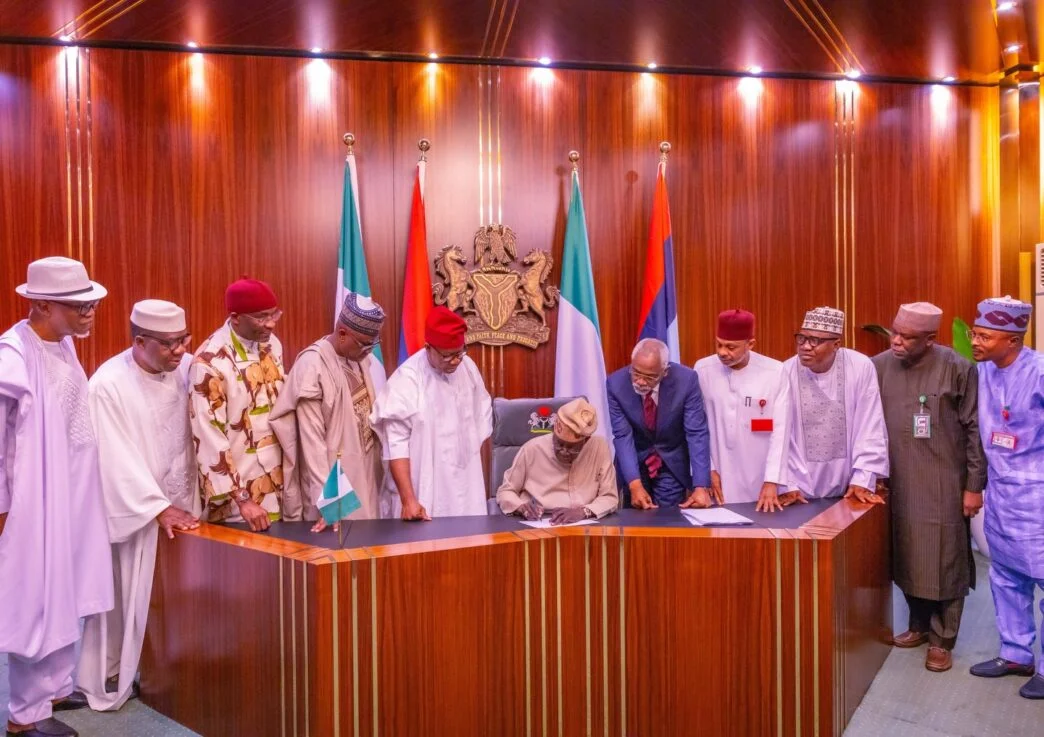
This history shapes contemporary skepticism toward amendments to the Electoral Act. The controversy around real-time electronic transmission of results illustrates the pattern. What began as clause-by-clause legislative consideration quickly became politicized, with defensive posturing from the Senate, threats from the police and suspicion from citizens. The debate was no longer about technical feasibility or constitutional safeguards; it became a referendum on political will. For many Nigerians, the question is not whether reform language exists on paper, but whether it will be implemented faithfully. The same body language of distrust appeared during recent tax reforms: significant policy shifts were announced, yet public communication remained thin, reactive, and often defensive. Citizens were left to interpret intentions through rumor, partisan commentary, and social media amplification rather than through structured civic dialogue.
Civil society organizations (CSOs), labour unions, professional associations, and legal advocacy groups have long attempted to bridge this gap; they have sustained election observation, strategic litigation, voter education, and policy advocacy efforts across electoral cycles and have historically mobilized around governance and accountability issues, reinforcing the link between political decisions and socio-economic outcomes. These actors have kept electoral reform on the national agenda even when political elites have preferred silence. Yet fatigue is visible. Every election cycle renews debates about credibility and transparency, but each cycle seems to mobilize fewer sustained participants. Civic energy spikes during crises and dissipates afterward. The reform conversation becomes episodic rather than institutional.
This reveals a central paradox: civic education alone is insufficient. Patriotism cannot be forced, and participation cannot be manufactured through slogans. When citizens perceive that engagement does not meaningfully alter outcomes, withdrawal becomes rational. An informed citizenry is inconvenient to a complacent system because it demands transparency and coherence. If the government were to invest seriously in values-shaping civic formation, embedding participatory mechanisms, publishing accessible policy rationales, and institutionalizing feedback loops it would raise the bar for accountability. But such empowerment requires political courage. It shifts governance from personality-driven policymaking to institution-driven governance. It constrains discretion, it limits opacity, it outlives parties and office holders.
The problem, therefore, is not simply legislative drafting; it is institutional trust architecture. Electoral reform cannot succeed in isolation from broader governance reform. Citizens must see consistency between law and practice, between rhetoric and implementation. Real-time transmission of results, for example, is not merely a technical clause; it symbolizes transparency. If the surrounding institutions’ procurement processes, judicial review mechanisms, and enforcement bodies are perceived as compromised, even the most progressive clause will be viewed with suspicion. Trust is cumulative. It is built when tax reforms are communicated transparently, when budgets are implemented faithfully, when court judgments are respected, and when public officials model accountability.
What then, must be done beyond awareness campaigns?
Firstly, institutionalize civic engagement. This means legally mandating structured public consultations before major legislative amendments, publishing explanatory memoranda in accessible language, and creating independent citizen oversight panels whose recommendations are formally responded to by lawmakers. Secondly, strengthening independent institutions, particularly the electoral commission, judiciary, and anti-corruption agencies through predictable funding frameworks insulated from executive discretion. This is to say, a funding system that operates based on clear rules and legal structures, rather than on decisions, moods , or political interest of whoever is currently in power. Thirdly, embedding civic education within school curricula, not as abstract patriotism, but as practical democratic literacy: how laws are made, how budgets are tracked, how petitions are filed, and how citizens can verify information. Fourthly, CSOs must evolve from reactive mobilization to long-term civic formation building local chapters, sustaining year-round engagement, and cultivating community-based democratic ambassadors who operate beyond election season.
People-centred democracy focuses governance on the lived realities, dignity, and participation of citizens, not the comfort of political elites. It goes beyond mere voting, asking if policies reflect public need and are shaped by citizens. This requires substantive, not symbolic, representation; continuous participation; and accountability through accessible transparency (budgets, procurement, policy rationales). It must also protect the rights and inclusion of marginalized groups like youth, women, persons with disabilities, minorities, and the economically vulnerable..
A people-centred democracy is institution-driven rather than personality-driven. It builds systems that outlast individual leaders. Rules apply consistently regardless of who occupies office. Institutions, courts, electoral bodies, oversight agencies, function independently and predictably. This consistency assures ordinary citizens who can see their influence reflected in outcomes, whether they feel heard in moments of disagreement, and whether they trust that public power exists for public purpose. When democracy is truly centred on people, participation becomes meaningful, trust becomes possible, and legitimacy becomes durable.
Finally, political leaders must recognise that trust is not an obstacle to governance; it is its precondition. The temptation to manage perception rather than substance is strong in media-saturated democracies. But awareness without participation breeds cynicism, which breeds apathy, and apathy weakens democratic legitimacy. If Nigeria is to consolidate its democracy, it must move from episodic reform to institutional continuity. Governance must be designed to outlive personalities. Policies must be rooted in transparent processes rather than political convenience. Only then will amendments to regulate the Electoral Act be judged not through the lens of suspicion, but through the evidence of institutional credibility.
What Nigerians require now is a disciplined civic infrastructure, citizens willing to move beyond outrage and into sustained engagement, Institutions strong enough to outlast political administrations, and leaders committed to governing for the public good rather than for self preservation. The work is slow, It rarely draws applause. But in the end, it is engagement, not noise, that leaves a mark on history.